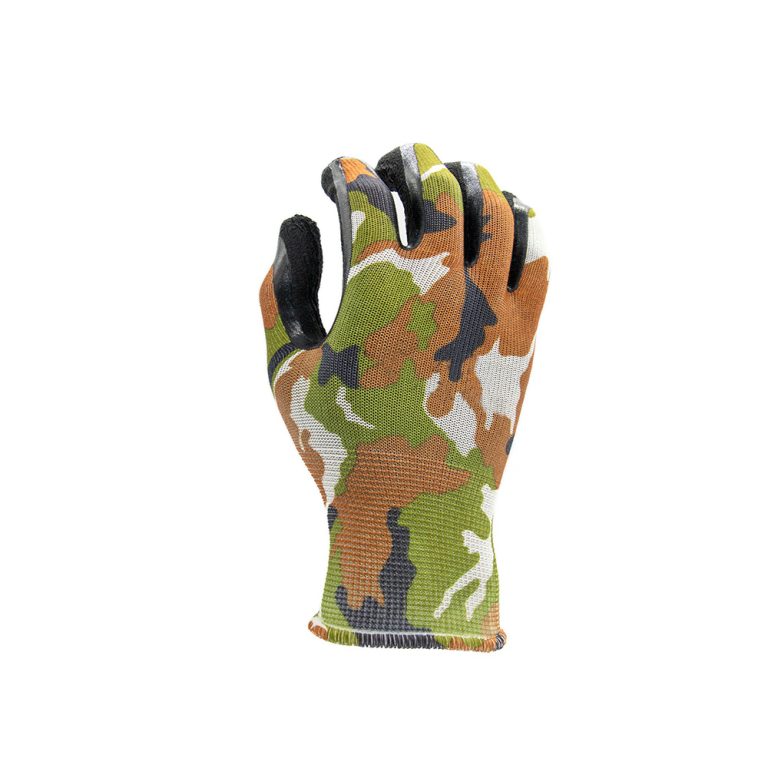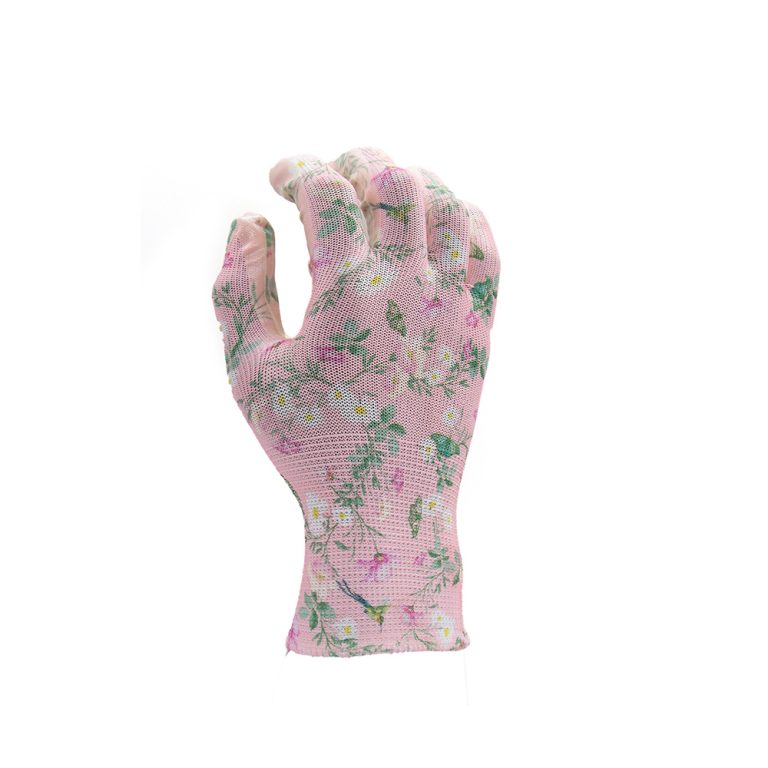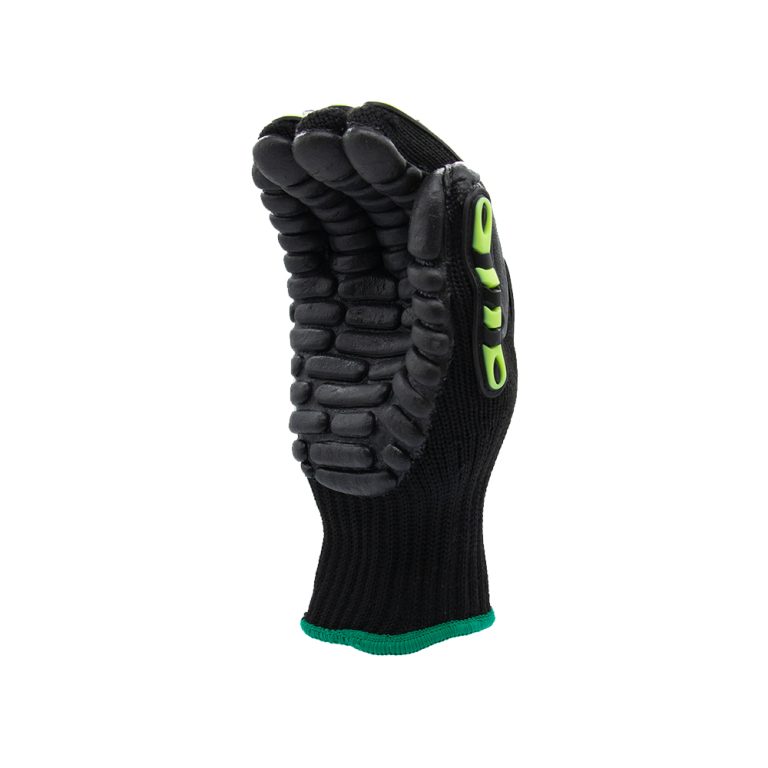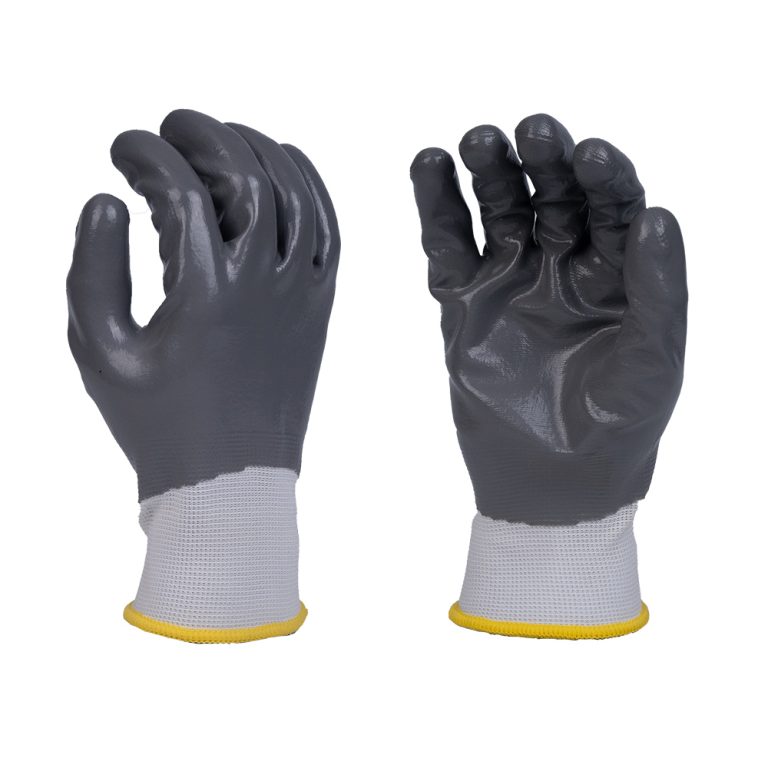

Choosing cold-weather work gloves should begin with the task and the palm coating, not with insulation thickness alone. Nitrile and latex coatings can both be used on winter work gloves, but they create different evaluation questions around surface contact, workplace restrictions, grip texture, fit, and product documentation.
For buyers, the key question is not “Which coating is universally better?” It is “Which finished glove is appropriate for the materials, surfaces, and operating conditions in this application?” The coating must be assessed together with the liner, shell, cuff, sizing, and required protection.

Why coating choice needs its own review
A winter glove normally combines several components:
- A knitted or textile liner
- An insulating layer or brushed interior
- A palm and finger coating
- A cuff or wrist construction
- A defined size and pattern
Each component solves a different problem. Insulation influences thermal comfort, while the coating forms the working contact surface. A glove may feel warm but provide unsuitable control on the materials being handled. A coating may provide useful grip in one condition but behave differently when exposed to moisture, oil, dust, or low temperatures.
This is why procurement teams should compare the coating separately before selecting the complete glove. Define the actual contact surfaces, the handling motions, any workplace material restrictions, and the protection requirements. Then ask suppliers to provide finished glove samples for comparison.
Nitrile or latex: begin with the material decision
Nitrile and latex should be treated as starting points for evaluation rather than complete performance guarantees. The finished result depends on coating thickness, surface texture, coverage, liner, pattern, and manufacturing specifications.
Questions to ask about nitrile-coated gloves
When considering nitrile, verify the coating’s intended application and the conditions under which the manufacturer has evaluated it. Do not assume that every nitrile coating has the same behavior on oily, wet, dusty, or cold surfaces.
Ask whether the coating is intended for the actual materials handled in your facility. Check the palm texture, finger coverage, flexibility, and compatibility information provided for the model. If workers handle chemicals, fuels, lubricants, or other defined substances, request product-specific compatibility data rather than relying on the word “nitrile.”
PONWELL’s 13-gauge nitrile frosted cashmere winter glove is one model buyers can include in a sample comparison. Confirm the current construction, size range, and application details before using it in a formal specification.
Questions to ask about latex-coated gloves
Latex-coated gloves should be evaluated through the same finished-glove criteria: texture, coverage, flexibility, liner movement, fit, and task suitability. The material may work well for some handling applications, but the correct choice depends on the surface and motions involved.
Latex also requires a workplace policy review. Some workers may have sensitivity to natural rubber latex. Buyers should confirm the coating material and communicate any relevant workplace restrictions before approving a model for regular use.
PONWELL lists a 13-gauge latex frosted wrinkle cashmere winter glove for cold-weather applications. Treat it as a candidate for practical evaluation, then compare it with the nitrile option under representative work conditions.
Compare surface texture, coverage, and contact points
The coating pattern often matters as much as the coating family. Two gloves made with the same coating material can feel very different because their palm texture and coverage are different.
Review the following features:
- Palm texture:A frosted, wrinkled, smooth, or otherwise textured surface may behave differently on cartons, tools, components, or packaged goods.
- Finger coverage:Coating that extends across the fingertips may change control during pinching, picking, and rotating small parts.
- Back-of-hand coverage:A coated back may affect flexibility and breathability, depending on the design.
- Thickness and flexibility:More coating material may change tactile feedback or make repeated bending less comfortable.
- Edge transitions:Abrupt transitions near the fingers or palm can create pressure points during repetitive work.
Use the actual workpiece during evaluation. Have operators pick up the smallest routine component, grip the largest handled object, turn a tool handle, pull packaging, and perform any repeated pinch or twist motion. Record where the coating helps and where it creates resistance.
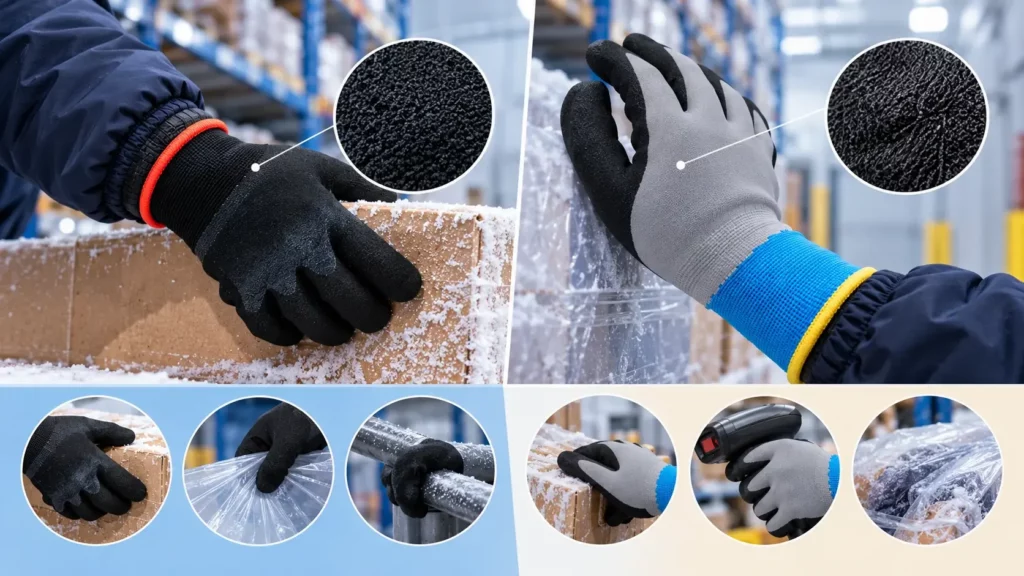
A coating that performs well on dry cartons may not behave the same way on smooth plastic, cold metal, damp materials, or surfaces carrying residue. The trial should reproduce the real contact condition as closely as possible.
Treat insulation as a separate specification
Cold-weather work gloves need suitable warmth, but insulation should not be used to decide between nitrile and latex. The coating and liner perform different functions, and combining them into one broad “warm glove” judgment can hide the real tradeoff.
When comparing two coated gloves, keep these variables visible:
- Liner material and interior feel
- Insulation thickness or construction
- Palm and finger coating
- Glove size and pattern
- Cuff coverage
- Work duration and exposure conditions
This makes it easier to determine whether a difference comes from the coating or from the rest of the glove. For example, a glove may feel less flexible because of its liner or size rather than its coating material. A controlled comparison should keep as many non-coating variables consistent as possible.
Run a coating-focused wear trial
A short fitting session is rarely enough for a procurement decision. A useful trial should test the coating through the motions and surfaces that define the job.
Create a simple evaluation sheet with the following fields:
- Materials handled:List the actual parts, tools, cartons, or surfaces.
- Condition:Record whether the contact is dry, damp, oily, dusty, cold, or mixed.
- Grip control:Note slipping, over-gripping, or the need to change hand position.
- Fine handling:Test pinching, sorting, fastening, rotating, and picking up small items.
- Flexibility:Observe whether the palm or fingertips resist repeated movement.
- Liner behavior:Check for bunching, movement, pressure, or moisture buildup.
- Size consistency:Record whether different workers experience loose or tight areas.
- After-use condition:Inspect coating wear, contamination, deformation, and drying needs.
Use several representative workers when possible. Hand shape, preferred fit, and task technique can change the result. A coating that feels acceptable to one operator may be difficult for another when the glove is used for a full work cycle.
The goal is not to produce a universal laboratory ranking. It is to identify which construction gives the required control for the defined application.
Build an RFQ around comparable information
A coating comparison becomes more useful when the supplier receives enough information to recommend a specific construction. Include:
- Application and industry
- Materials and surfaces handled
- Dry, wet, oily, dusty, or mixed conditions
- Typical cold exposure and work duration
- Required sizes and hand measurements
- Desired palm texture or coating coverage
- Liner and insulation expectations
- Additional abrasion, cut, impact, or puncture requirements
- Sample quantity and expected order volume
- Packaging, labeling, color, or branding requirements
- Documentation needed for approval
Ask the supplier to identify which features are standard and which may vary by model or order configuration. Request samples that make the comparison meaningful, such as similar gauges or liners with different coatings.
Buyers can review PONWELL’s nitrile and latex cold-weather glove category and broader product range before narrowing the request to a specific work condition.
When to request supplier support
Supplier input is most useful when the buyer provides a defined application rather than a general request for “warm gloves.” Share the surfaces handled, expected exposure, required sizes, preferred coating options, sample quantity, and any workplace restrictions.
PONWELL can be included in the sourcing process when the buyer needs to compare cold-weather nitrile and latex constructions. Final suitability should still be confirmed against the current product specification and the results of the wear trial.
Conclusion
The right cold-weather work gloves are selected by comparing the complete construction, with special attention to the coating’s contact behavior. Nitrile and latex should be judged by the actual surfaces, handling motions, workplace restrictions, texture, coverage, and product documentation. Insulation remains important, but it should be reviewed separately so that coating performance is not confused with liner or fit.
A practical sample trial and a detailed RFQ will produce a more reliable decision than choosing by coating name alone.
Часто задаваемые вопросы
Is nitrile always better than latex for winter work gloves?
No. The suitable choice depends on the finished glove, work surface, moisture or oil exposure, workplace policy, fit, and required protection.
Does a textured coating guarantee better grip?
No. Texture may influence grip, but performance also depends on the handled material, contamination, temperature, coating formulation, and glove fit.
Should buyers compare gloves with the same liner?
When possible, yes. Keeping the liner and insulation similar makes it easier to identify differences caused by the coating itself.
Can latex-coated gloves be used by every worker?
Not necessarily. Buyers should confirm the coating material and consider workplace procedures for workers with latex sensitivity.
What should a supplier receive before recommending a coating?
Provide the application, surfaces handled, exposure conditions, sizes, required protection, preferred coating, sample quantity, and expected order volume.
For a model comparison or application review, contact PONWELL’s technical team with your operating conditions and sourcing requirements.