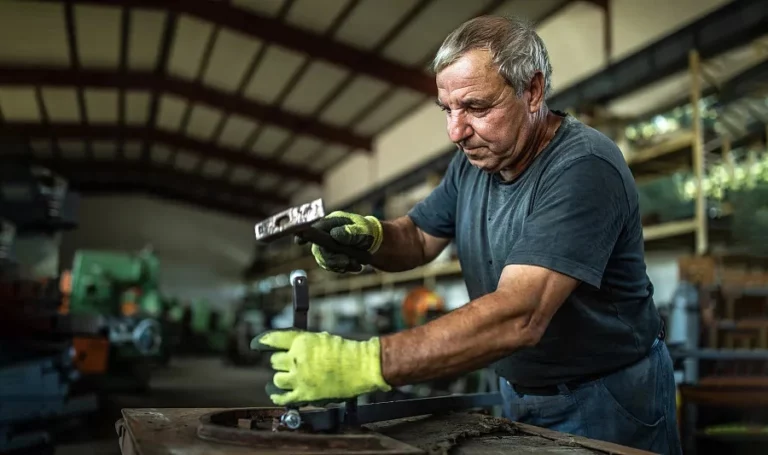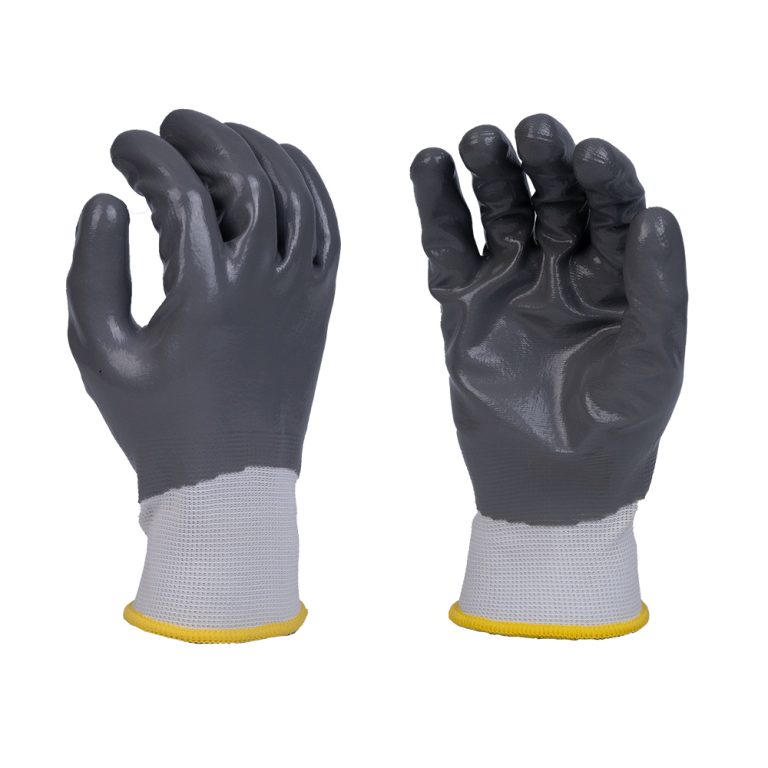

Breathable working gloves for long shifts must balance moisture management, grip, protection, dexterity, and supply consistency. For distributors, PPE importers, industrial retailers, and safety managers, the buying decision extends beyond a comfortable sample. It includes measurable specifications, application fit, compliance evidence, packaging, replenishment, and dependable delivery.
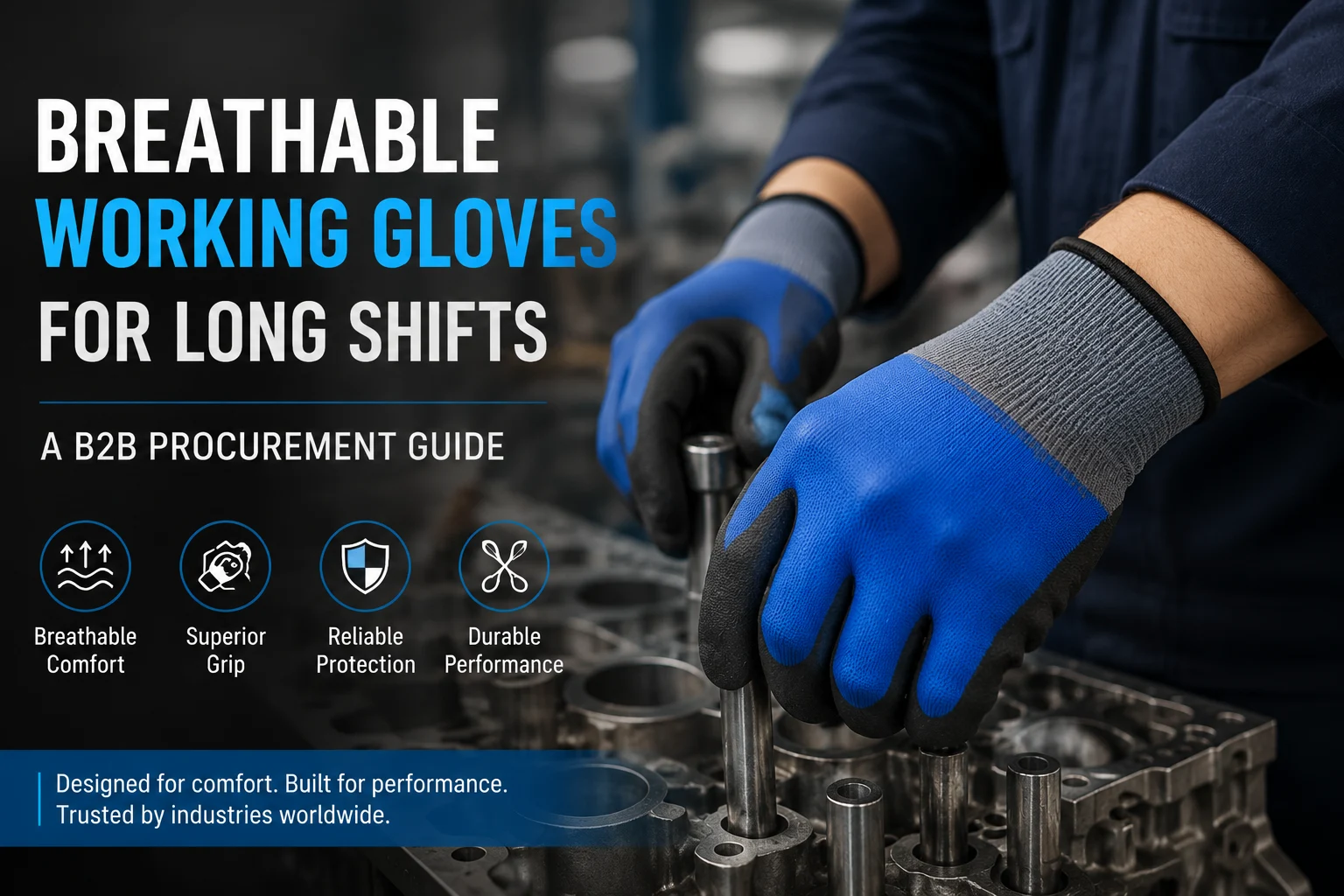
Why Breathability Matters in Long-Shift PPE Programs
Heat and Moisture Management
Hands remain active throughout assembly, warehousing, construction, logistics, and outdoor maintenance. A liner or coating that traps heat can increase perspiration, soften skin, and make tools or components harder to control.
Moisture may also affect grip, sizing perception, and the usable life of some glove materials. In a B2B PPE program, these problems can appear as lower wear rates, more frequent replacement, and complaints that are difficult to separate from poor fit or unsuitable protection.
Comfort and Risk Control
Breathability is not a stand-alone performance claim. A glove selected for dry handling may use a light knitted liner and localized coating, while a wet or cold application may require a waterproof barrier or thermal construction.
Procurement specifications should define the workplace hazard first, then establish acceptable comfort and ventilation characteristics without weakening the required protection level.
Technical Features to Specify
Liner Construction and Gauge
Knitted liners are commonly evaluated by gauge, fiber blend, stretch recovery, and seam construction. A finer gauge can support dexterity and a close fit, while a heavier liner can add warmth and cushioning.
The correct selection depends on contact pressure, tool size, ambient temperature, and whether the glove must be worn with other PPE. Samples should be checked for fingertip compression, palm bunching, wrist pressure, and heat build-up after representative work cycles.
Coating Design and Ventilation Zones
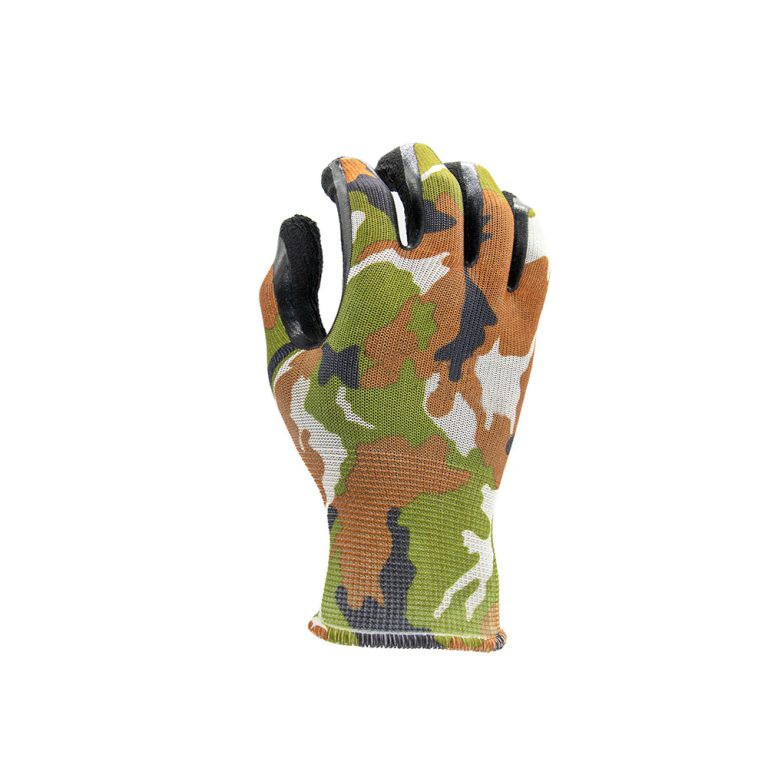
Nitrile, latex, polyurethane, and other polymer coatings can be configured as palm-dipped, three-quarter, or fully coated designs. Palm-dipped formats generally leave more textile surface available for vapor release, while fully coated constructions prioritize liquid exclusion.
Micro-foam or textured finishes may improve grip while retaining channels for air movement. However, the balance should be validated against oil, water, abrasion, and cleaning requirements. Product data should state the coated area and intended environment rather than relying on the word “breathable” alone.
Fit, Dexterity, and Wrist Retention
EN ISO 21420:2020 establishes general requirements and test methods for protective glove design, safety, comfort, sizing, and dexterity. Procurement teams should request size charts, dimensional tolerances, cuff construction, and dexterity test results where applicable.
A secure elastic or knitted cuff helps prevent debris ingress and reduces repeated adjustment. Excess material at the fingertips, a loose thumb crotch, or an overly tight wrist can undermine comfort and safe handling during an extended shift.
Match the Glove to the Work Environment
Dry Handling, Assembly, and Logistics
For carton handling, component picking, inspection, and light assembly, priorities often include low hand fatigue, tactile feedback, abrasion resistance, and a grip pattern suited to cardboard, plastic, or metal.
A breathable knitted liner with a controlled palm coating can be evaluated against actual parts and tools. Buyers should confirm whether the coating remains flexible after storage and repeated handling.
Wet, Oily, or Washdown Operations
Gants imperméables are relevant when liquid ingress, wet surfaces, or washdown routines dominate the risk profile. Breathability may be delivered through liner selection, membrane construction, or ventilation outside the liquid-exposure zone.
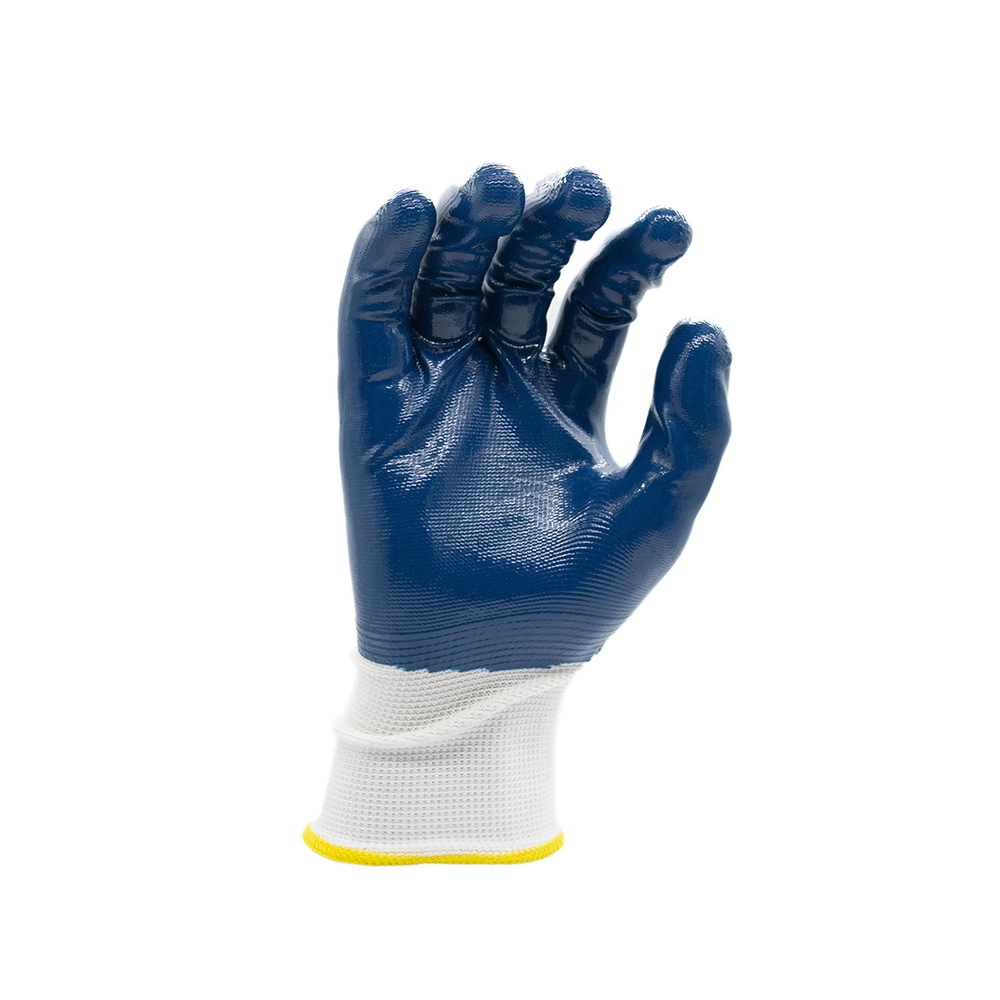
A procurement review should separate waterproof performance from water-repellent surface treatment. Test methods, conditioning, seam construction, and cuff details should be included in the technical documentation.
Cold-Weather and Outdoor Shifts
Cold-weather gloves need insulation without excessive bulk. Nitrile-latex cold-weather constructions can combine a warmer liner with a coating designed for grip in variable conditions.
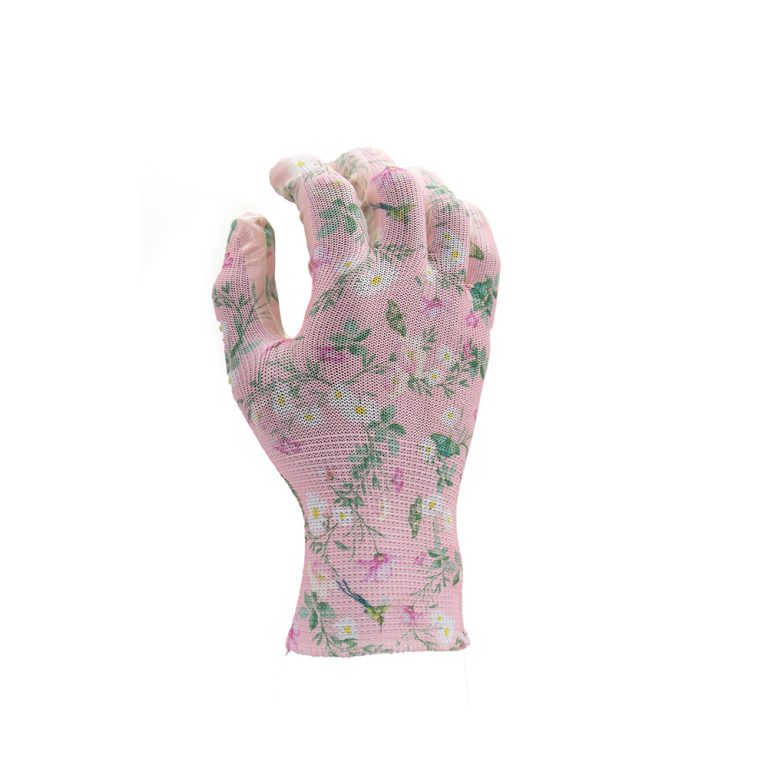
Field trials should cover early-shift donning, tool control, temperature changes, and storage between shifts. Gardening, landscaping, and outdoor maintenance programs may also require abrasion resistance, wet handling, and compatibility with repetitive wrist movement.
Cut, Impact, and Vibration Hazards
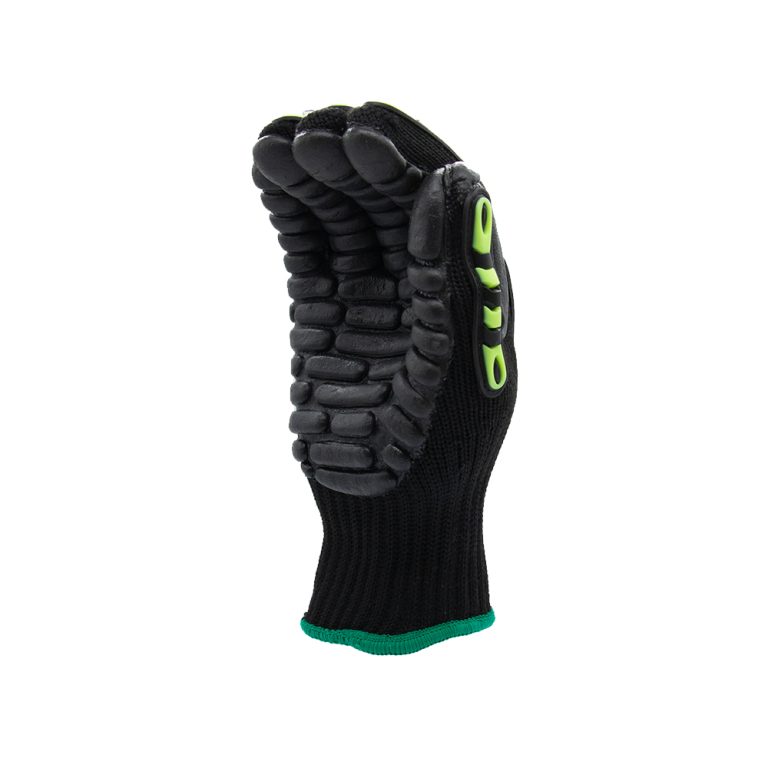
When sharp edges, impact zones, or vibrating tools are present, comfort cannot replace the required protection. HPPE or other cut-resistant liners, impact-damping zones, and anti-vibration features should be specified with the relevant EN 388 performance markings and test reports.
A layered design can preserve ventilation in lower-risk areas while adding material where exposure is concentrated. Final selection should be based on the documented hazard assessment and trial results.
A Practical B2B Evaluation Workflow
Build a Measurable Specification Sheet
An effective request for quotation should list the application, hazards, coating coverage, liner gauge, fiber content, size range, cuff type, color, logo or packaging requirements, target annual volume, delivery destination, and required documents.
Comfort criteria can include maximum acceptable seam height, preferred stretch, tactile requirements, and a shift-trial protocol. Clear inputs make quotations comparable and reduce late-stage engineering changes.
Verify Testing and Compliance Evidence
EN ISO 21420 should be reviewed for general glove requirements, while EN 388 is commonly used for mechanical risks such as abrasion, blade cut, tear, and puncture. Impact protection is marked when tested.
Depending on the application, buyers may also need chemical, thermal, food-contact, or regional PPE documentation. Test reports should identify the exact model, construction, size, date, laboratory, and conditioning. Certificates for a similar-looking glove are not sufficient evidence for the quoted SKU.
Run a Representative Wear Trial
Samples should be tested by trained operators using the same tools, materials, shift length, cleaning routine, and climate found at the target site.
The evaluation should record visible moisture, grip failures, dexterity issues, cuff slippage, coating wear, and replacement reasons. A structured trial produces more useful purchasing evidence than a general comfort score and helps define an acceptance standard for production batches.
Supplier Capability and Supply Continuity
Manufacturing Controls
For repeat orders, consistency depends on raw-material inspection, knitting or base-material control, coating and dipping parameters, curing, trimming, final inspection, and packaging.
OEM/ODM programs should document approval samples, material substitutions, logo artwork, carton marks, and change-control procedures. These controls help protect the agreed balance between breathability and protection when order volumes increase.
Documentation, Packaging, and Logistics
Distributors and industrial buyers should request a technical data sheet, packing specification, carton dimensions, barcode or label format, inspection plan, and shipment lead-time assumptions.
Mixed-size cartons, private-label packaging, and replenishment stock may influence landed cost as much as unit price. Export experience and organized warehouse operations can also reduce the risk of stock-outs, relabeling, and receiving delays.
How a Qualified Supplier Fits a Procurement Program
Product Breadth for Multi-Hazard Sourcing
A qualified source should support coated, waterproof, impact-protection, cut-resistant, cold-weather, and gardening constructions where required. Broad capability can help map several workstations to a controlled product family while retaining application-specific protection.
OEM/ODM Collaboration
ODM work can cover concept development, material selection, ergonomic pattern design, grip and thermal features, colors, logos, and packaging.
OEM production should follow approved specifications through raw-material inspection, knitting, coating or dipping, curing, finishing, and final assembly. A documented process is important when a private-label program requires a purpose-built breathable glove for long-shift applications.
Conclusion
Breathable working gloves for long shifts should be purchased as a documented system. Hazard assessment, liner and coating design, fit, testing, operator trials, and supply controls must work together.
With a broad functional glove portfolio, export experience across 30 countries and regions, and established OEM/ODM capabilities, PONWELL can support procurement teams evaluating breathable gloves for long-shift applications. Procurement teams can contact PONWELL with the application, target protection level, size mix, annual volume, and packaging requirements to discuss suitable breathable glove solutions and request a quotation.
FAQ
What Makes a Work Glove Breathable?
Breathability normally comes from the interaction of the liner, coating coverage, polymer formulation, knit structure, and fit. A palm-dipped glove may release more vapor through the uncoated back than a fully coated glove, but the trade-off depends on liquid exposure and required protection.
Are Breathable Gloves Suitable for Wet Work?
Some are, but “breathable” does not mean waterproof. Wet-work specifications should identify liquid type, exposure duration, cuff requirements, and the validated waterproof test. A barrier construction may reduce vapor transmission, so comfort should be confirmed during a representative trial.
Which Standards Should Buyers Request?
EN ISO 21420:2020 is the general reference for protective glove design, comfort, sizing, and dexterity. EN 388 is used for many mechanical hazards. Additional standards or regulations may apply to chemical, thermal, food-contact, or market-specific requirements. Documentation should match the exact model and construction.
How Can Long-Shift Comfort Be Measured?
A controlled field trial should use the target tools, tasks, shift duration, climate, and cleaning process. Evaluation criteria can include hand moisture, heat perception, grip, dexterity, cuff movement, coating wear, and replacement causes. Comparing the same metrics across samples supports a defensible sourcing decision.
Can Private-Label Buyers Customize Breathable Glove Designs?
OEM/ODM projects can define the liner, coating, grip pattern, colors, logos, sizing, and packaging. A written specification, approved sample, test plan, and change-control record should be completed before volume production.