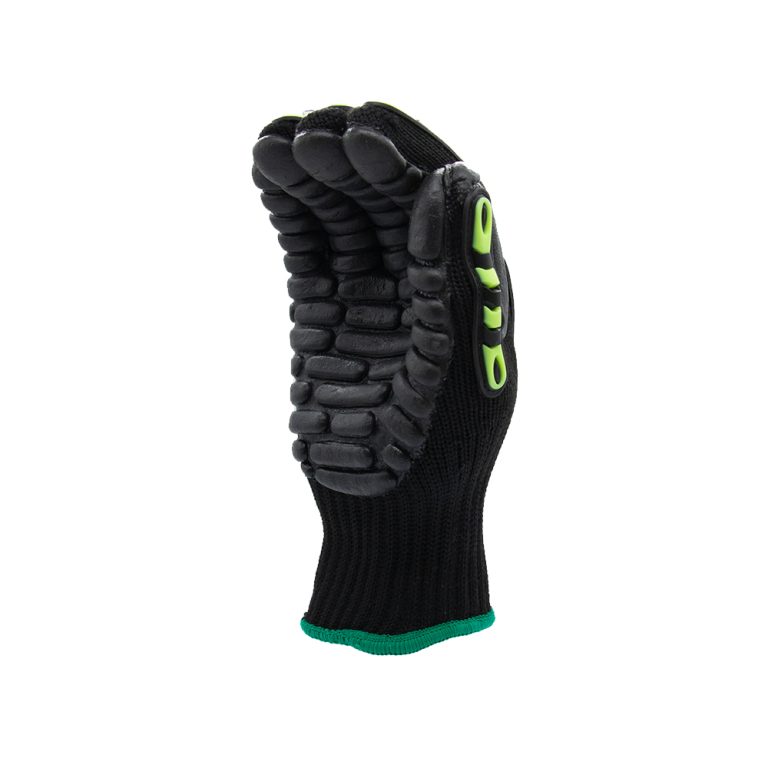

Waterproof working gloves for warehouse and outdoor use must keep moisture away from the hands while preserving grip, dexterity, and comfort. The right glove is not selected by waterproofing alone. Buyers must also consider the liquid involved, handling surface, temperature, abrasion level, shift duration, cuff design, and required finger control.
A glove that performs well in a damp warehouse may not provide enough insulation for a cold loading yard. Likewise, a heavily coated outdoor glove may be unnecessarily bulky for scanning labels or picking small components. A task-based specification helps procurement teams avoid these mismatches.
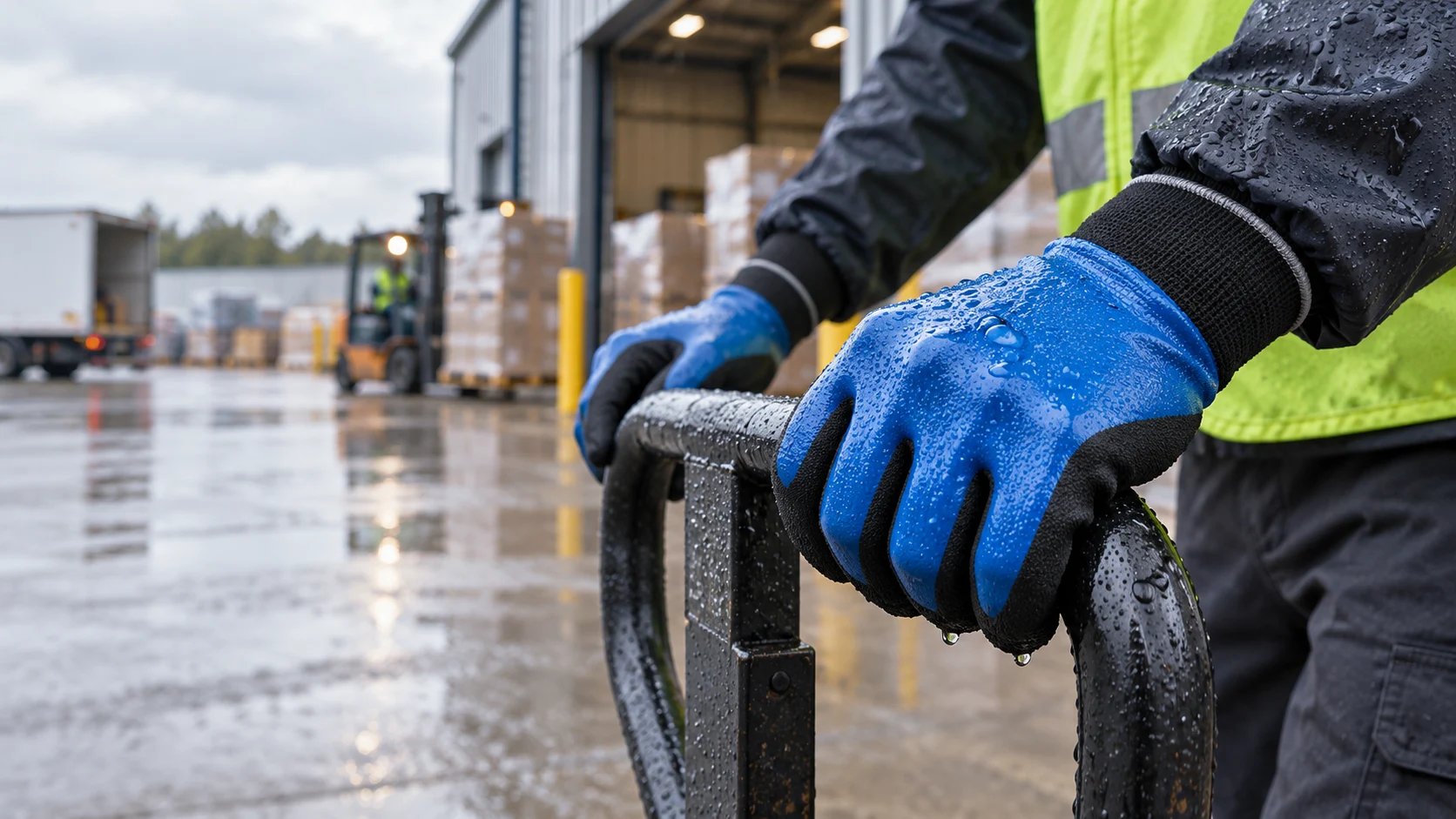
Waterproof Versus Water-Resistant Work Gloves
Water-resistant gloves are designed to delay moisture penetration during light or occasional exposure. Waterproof gloves use a more complete barrier intended to prevent liquid from reaching the hand under defined conditions.
Coating coverage is a major difference. Palm-coated gloves leave part of the textile liner exposed, which can improve ventilation but allow water to enter through the back. Fully coated gloves provide broader liquid protection, although breathability may be lower.
Buyers should therefore confirm:
- Which parts of the glove are coated
- Whether the cuff is included in the protective area
- The liquids and exposure duration covered by the product specification
- Whether seams or knitted areas can admit moisture
- How flexibility changes after repeated wet use
- The recommended cleaning, drying, and storage method
The term “waterproof” does not automatically establish resistance to chemicals, cuts, punctures, impact, or extreme temperatures. These hazards require separate evaluation.
Match the Coating to the Handling Task
The coating influences grip, liquid resistance, abrasion behavior, flexibility, and cleaning. The liner affects fit, hand movement, thermal comfort, and fatigue.
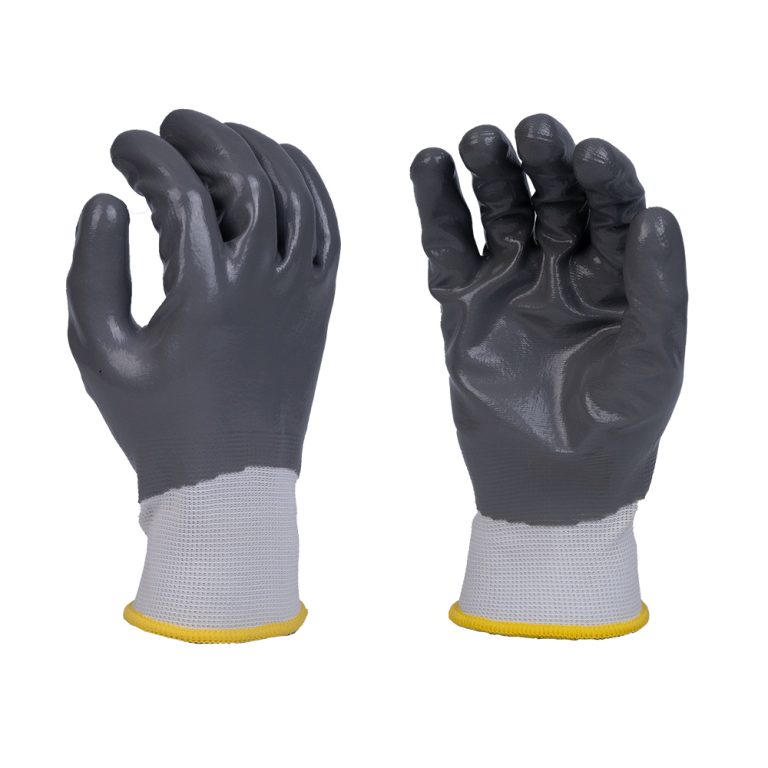
Frosted Nitrile for Wet or Oily Warehouse Handling
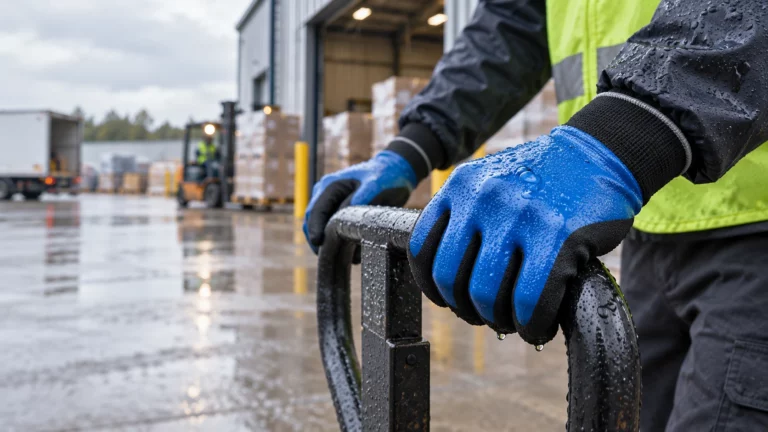
PONWELL’s Guantes impermeables de nitrilo esmerilados de 13 agujas combine a knitted liner with a fully coated nitrile construction and a textured surface. The product is intended for applications that may include wet, oily, or slippery handling in logistics, warehousing, manufacturing, construction, and maintenance.
The frosted texture can increase friction when workers handle plastic containers, tools, machinery parts, or other smooth objects. Nitrile is also commonly considered where contact with oil or industrial fluids is part of the task. Compatibility must still be verified against the specific substance, concentration, temperature, and exposure time.
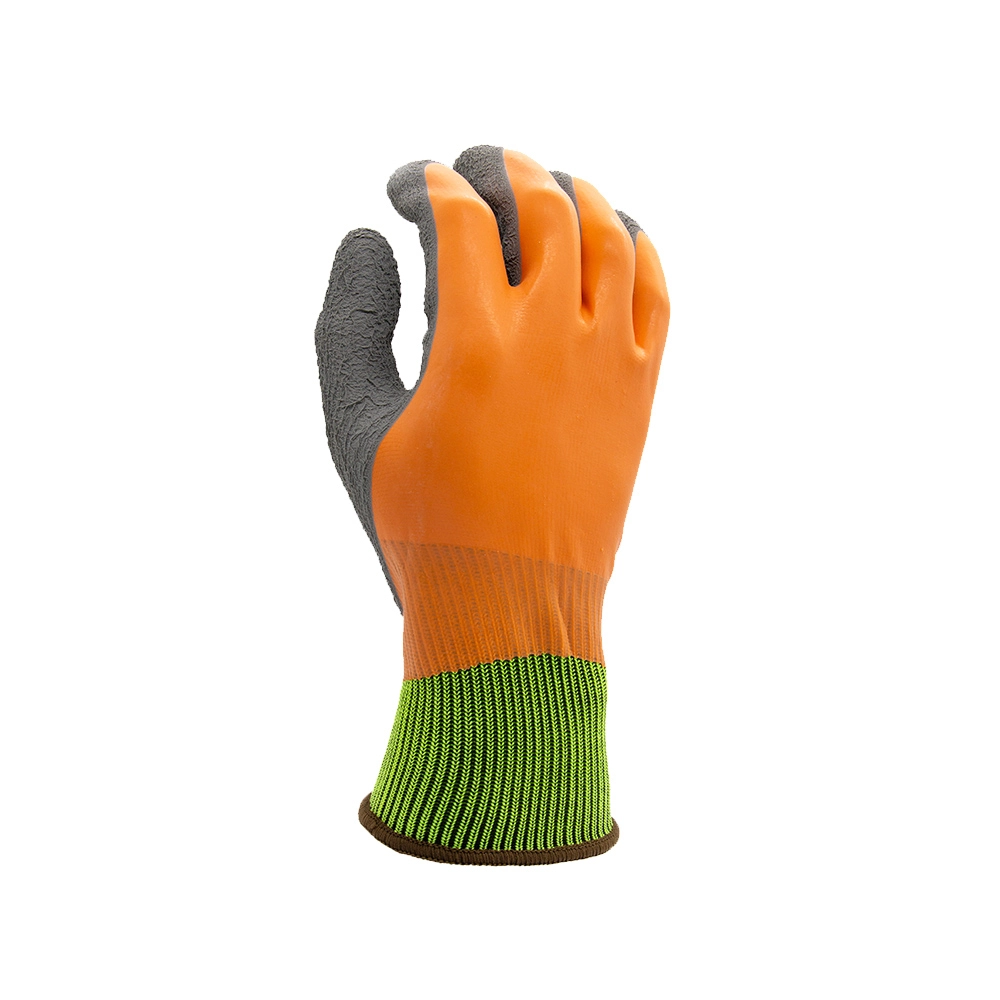
Latex Wrinkle Foam for Rough Outdoor Surfaces
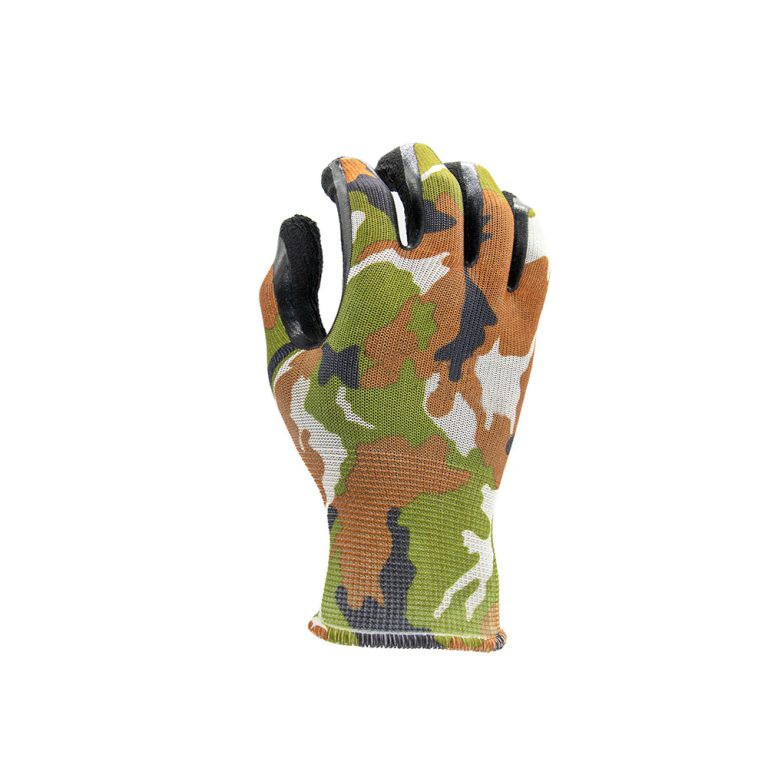
PONWELL’s Guantes impermeables de espuma de látex arrugada de 13 agujas use a textured latex surface intended to support grip in wet, muddy, slippery, or rough conditions. Listed applications include construction, plumbing, agriculture, fishing, landscaping, logistics, and outdoor maintenance.
A wrinkle finish can be useful for gripping rope, wood, tools, pipes, and uneven materials. However, buyers should confirm that latex is suitable for the workforce and intended process. Required documentation may vary when skin sensitivity, food contact, chemical exposure, or other regulated conditions are involved.
How Warehouse Tasks Change the Specification
A warehouse glove should help workers control packages and equipment without slowing routine hand movements. Moisture exposure may occur at loading docks, refrigerated areas, outdoor receiving zones, washdown stations, or when handling leaking containers.
Important warehouse selection criteria include:
- Grip on cardboard, shrink wrap, plastic totes, and metal surfaces
- Dexterity for scanners, labels, controls, and small components
- Abrasion resistance during repeated handling
- Cuff retention during lifting and picking
- Fit across the required workforce size range
- Comfort over the expected wearing period
- Visibility when workers operate around vehicles or equipment
The trial should reproduce the real workstation. Workers should use the same cartons, tools, scanners, pallets, and handling cycle expected during normal operations. Procurement teams can then record moisture entry, grip loss, coating wear, cuff movement, and any need to remove the gloves.
What Outdoor Work Adds to the Risk Profile
Outdoor workers may handle wet tools, muddy materials, ropes, timber, pipes, construction products, or landscaping equipment. Rain is only one consideration. Wind, temperature changes, rough surfaces, oil, soil, and repeated contact with water can also affect glove performance.
A suitable waterproof outdoor work glove should balance:
- Liquid coverage for the expected exposure
- Grip on wet and irregular surfaces
- Flexibility at the working temperature
- Resistance to abrasion from tools and materials
- Secure wrist retention
- Sufficient dexterity for controls and fasteners
- Comfort during repeated lifting or tool use
A heavily textured coating may improve grip on rough materials, while a smoother surface may suit tasks requiring easier cleaning or more precise handling. Field trials should include both wet and dry phases because grip behavior can change as the surface condition changes.
Waterproof Gloves for Cold Conditions
Waterproofing and thermal insulation solve different problems. A liquid barrier helps keep external moisture away from the hand, but it does not prove that the glove is suitable for a freezer, winter loading dock, or prolonged outdoor shift.
Cold-weather buyers should request information about liner construction, intended temperature conditions, glove thickness, flexibility after cold exposure, and drying procedures. A thicker liner may improve warmth but can reduce fingertip control.
The sample trial should include the lowest expected working temperature and the actual tools or controls. If workers handle sharp edges, chemicals, or impact hazards in the cold, those risks must be added separately to the specification.
A Practical B2B Procurement Process
1. Define the Application
Describe the workstation, objects handled, liquid type, exposure frequency, temperature, shift length, and required hand movements. Warehouse and outdoor tasks should be separated when their conditions are materially different.
2. Set Measurable Requirements
Specify the liner, coating material, coating coverage, surface texture, cuff style, size range, color, and packaging. State whether the priority is continuous liquid exclusion, wet grip, oil resistance, warmth, or dexterity.
Avoid broad requirements such as “heavy duty” without measurable acceptance criteria. The specification should identify what the glove must do and under which conditions.
3. Request Matching Documentation
Ask for a technical data sheet, material information, size chart, applicable test reports, packaging specification, and model identification. Each document should match the exact glove being quoted. Evidence from a similar construction should not automatically be treated as evidence for the proposed model.
4. Conduct a Representative Wear Trial
Provide samples to trained workers and test them during normal operations. Record:
- Moisture inside the glove
- Grip failures or dropped objects
- Difficulty operating tools or controls
- Fingertip compression or excess material
- Cuff slippage
- Coating damage
- Hand fatigue
- The reason each pair is replaced
The trial should last long enough to reveal comfort and durability issues that may not appear during a brief inspection.
5. Evaluate Supply Consistency
For repeat orders, confirm approved samples, material controls, dimensional tolerances, inspection procedures, packaging, carton configuration, and change management. Distributors should also review labeling, barcodes, private-label requirements, destination, and replenishment planning.
Unit price alone does not show the operational cost of a glove. Premature replacement, inconsistent sizing, poor grip, and packaging errors can all affect total procurement performance.
Selecting a PONWELL Waterproof Glove Program
The PONWELL waterproof glove range includes nitrile and latex-coated constructions for different wet-handling conditions. Buyers can compare coating coverage, surface texture, liner design, and intended applications before selecting samples.
Where a standard model does not match the target market or workstation, PONWELL OEM/ODM services can be discussed for material selection, colors, branding, sizing, and packaging. Any customized construction should proceed through a written specification, approved sample, and suitable verification process.
Conclusion
Waterproof working gloves suitable for warehouse and outdoor use must be matched to the actual exposure and handling task. Coating coverage, wet grip, liner comfort, cuff retention, temperature, dexterity, and abrasion should all be evaluated before purchase.
For a product fit check or quotation, contact PONWELL’s technical team with the application, liquids involved, operating temperature, materials handled, required sizes, order quantity, destination, and packaging requirements.
Preguntas frecuentes
Are waterproof gloves suitable for everyday warehouse work?
They are suitable where workers encounter moisture, washdown, wet packaging, loading docks, or cold storage. Dry picking operations may benefit more from a lighter, more breathable construction.
What coating is suitable for oily handling?
Nitrile is commonly considered for oily tasks, but suitability depends on the exact substance, concentration, temperature, exposure time, and glove construction. Product documentation should be reviewed before approval.
Can one glove cover warehouse and outdoor work?
It can when both environments have similar hazards and handling requirements. Separate gloves may be more effective when outdoor work adds cold, mud, heavy abrasion, or prolonged rain exposure.
Are waterproof work gloves also suitable for winter?
Not necessarily. Waterproofing limits liquid entry, while winter suitability depends on insulation, temperature performance, fit, and flexibility in the cold.
What should buyers include in an RFQ?
Include the application, liquid exposure, temperature, coating preference, liner requirements, sizes, quantity, branding, packaging, destination, and required technical documents.