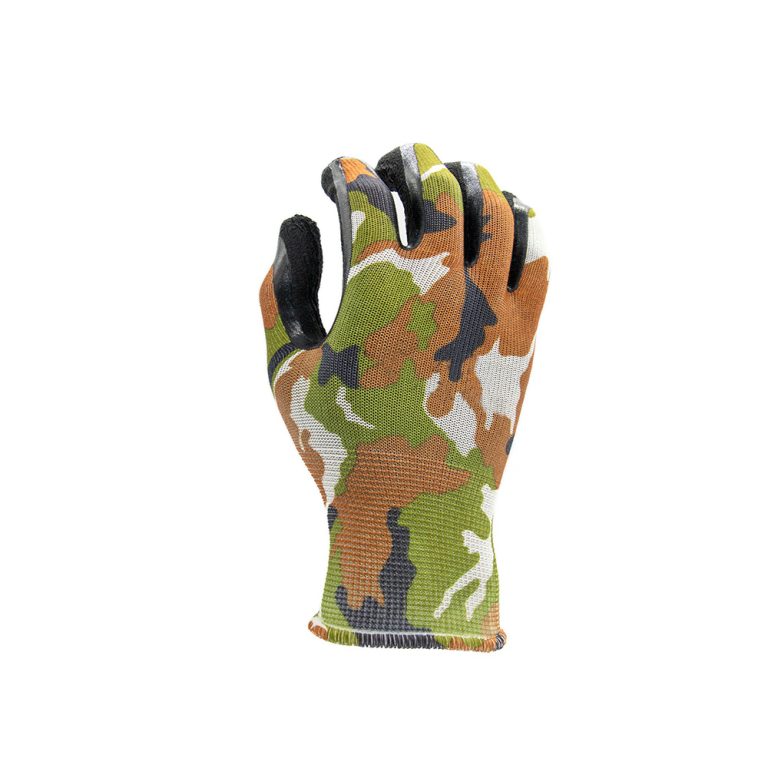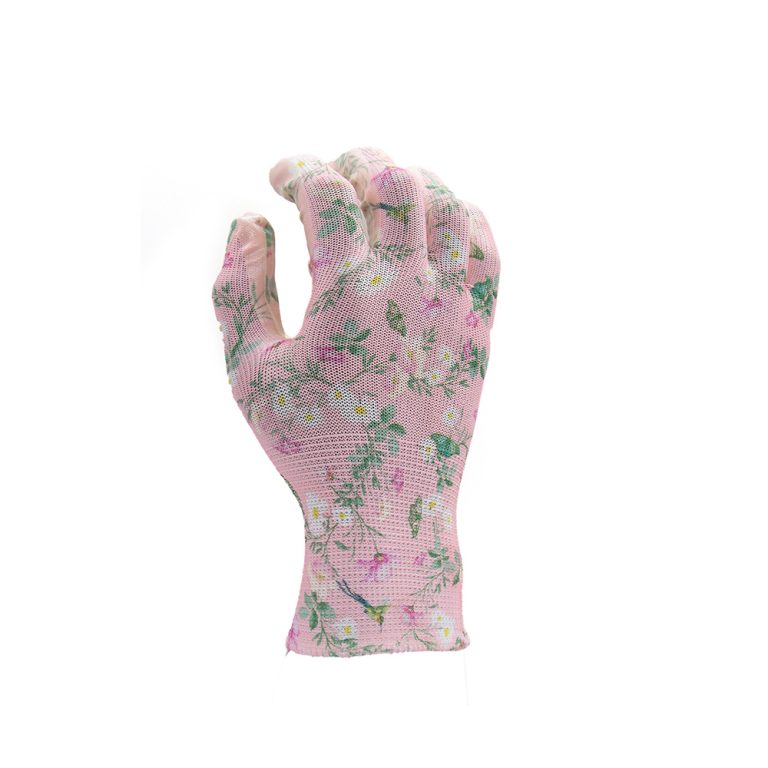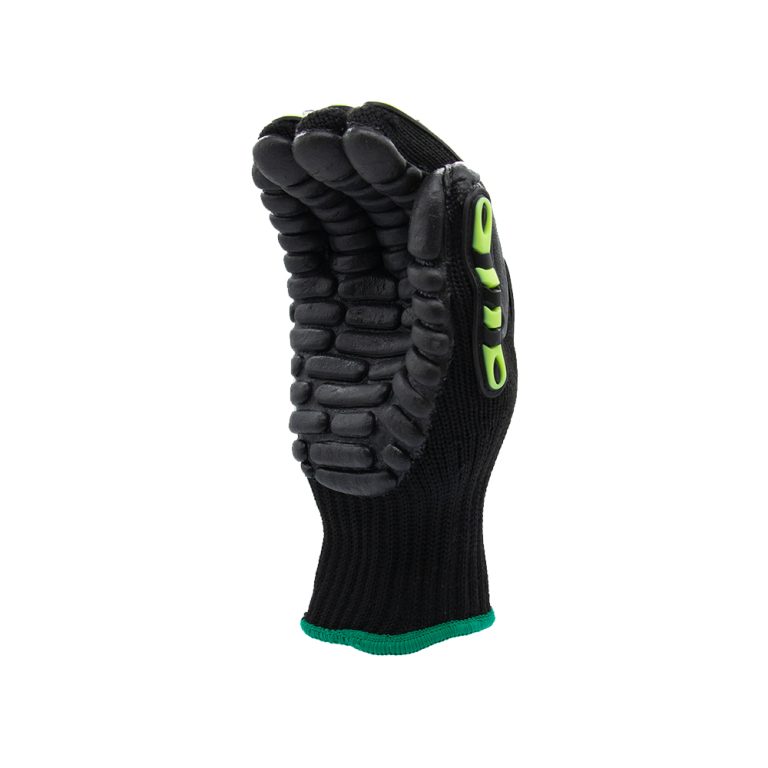

Nitrile coated gloves combine a knitted liner with a nitrile layer on the palm, fingers, or entire hand. For bulk buyers, the right choice is not simply “nitrile versus another coating.” The finish, coverage, liner, gauge, grip pattern, cuff, and protection level all affect comfort, durability, and cost per wear.
This guide explains the main options and gives procurement teams a practical way to compare nitrile coated work gloves before approving a volume order.
Why Nitrile Coated Gloves Suit Industrial Programs
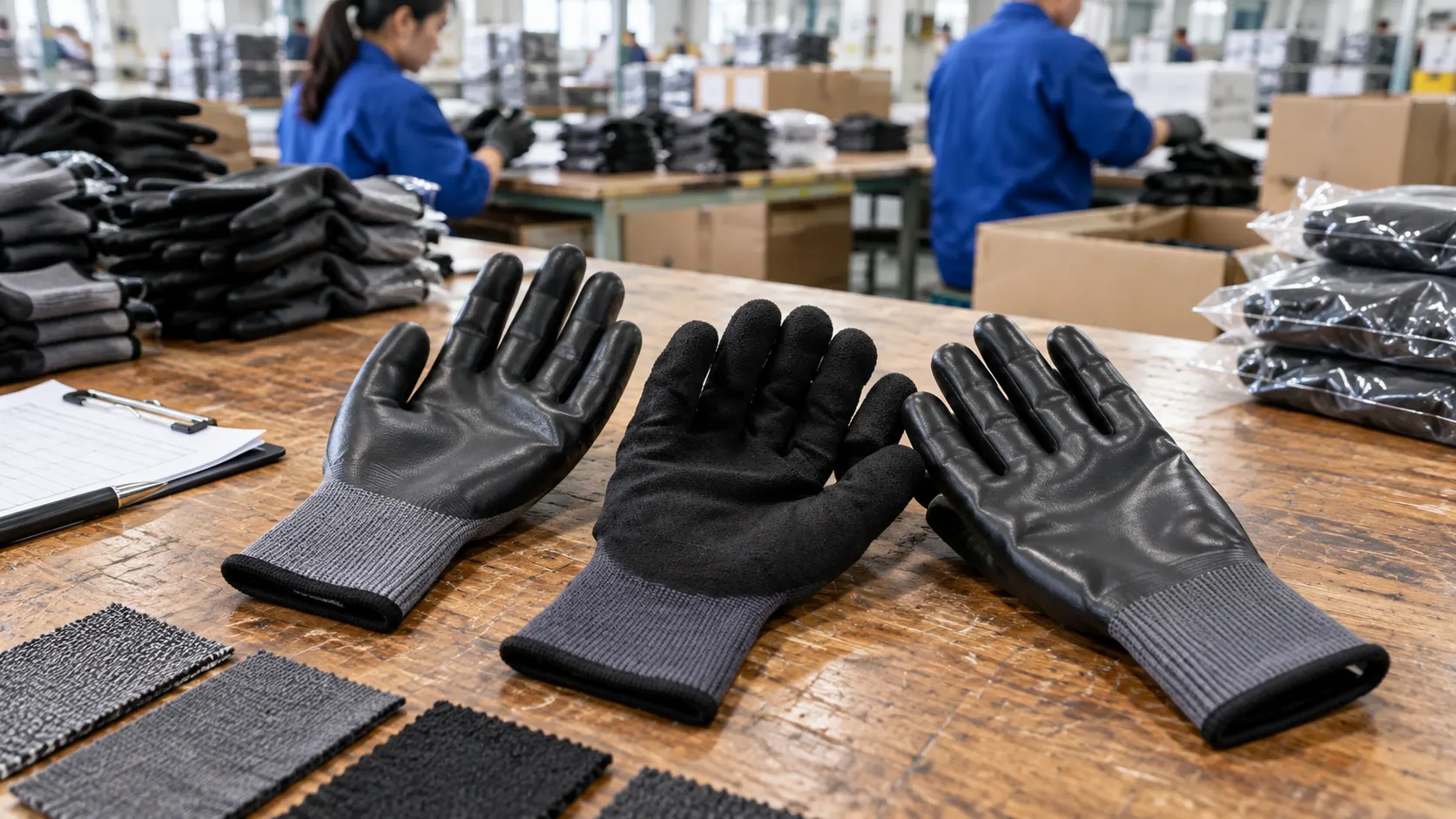
Nitrile is a synthetic rubber commonly selected where workers need grip and resistance to abrasion, oil, and grease. Because only the working surface may be coated, many designs retain a breathable knitted back. That combination can provide more dexterity than a bulky all-rubber glove while protecting the high-contact areas of the hand.
These benefits make nitrile coated gloves relevant to assembly, warehousing, automotive work, maintenance, construction, packaging, and material handling. However, “nitrile coated” is a construction family, not a complete safety specification.
In the United States, OSHA requires employers to base hand-protection selection on the task, conditions, duration of use, and identified hazards. Buyers should therefore start with a hazard assessment and use the OSHA hand-protection selection requirements as a baseline rather than choosing by coating name alone.
Compare Nitrile Coating Finishes
Smooth or Flat Nitrile
A smooth or flat coating creates a continuous surface that can work well for dry handling and light contact with oil or grease. It is often easy to wipe clean and may suit assembly, inspection, packaging, and automotive component handling. The tradeoff is that a smooth surface may offer less traction than a textured finish when liquids are present.
PONWELL’s 13-needle printed nitrile gloves use a smooth palm coating with a fine knitted liner. This construction illustrates how a light liner and coated working surface can support dexterity in production, logistics, maintenance, and other general handling tasks.
Foam and Microfoam Nitrile
Foam nitrile has a porous texture that can channel small amounts of liquid away from the contact surface. Microfoam versions generally use a finer texture where tactile control matters. Compare grip under the actual dry, damp, and lightly oily conditions; “foam” does not guarantee equal performance across suppliers.
Sandy or Frosted Nitrile
Sandy and frosted finishes create a rougher contact surface. They may improve traction on wet, oily, or irregular objects, but texture, coating weight, and flexibility should be evaluated together.
Choose the Right Coating Coverage
Coating coverage changes both protection and wear comfort.
| Construction | Typical advantage | Key tradeoff | Suitable evaluation scenario |
|---|---|---|---|
| Palm coated | Breathable back and good dexterity | Limited liquid coverage | Dry or lightly oily handling |
| Three-quarter coated | More coverage around fingers and knuckles | Less ventilation than palm coating | Repeated contact with damp or dirty materials |
| Fully coated | Broader barrier against water, oil, and grime | More heat buildup and potentially less flexibility | Sustained wet or oily work |
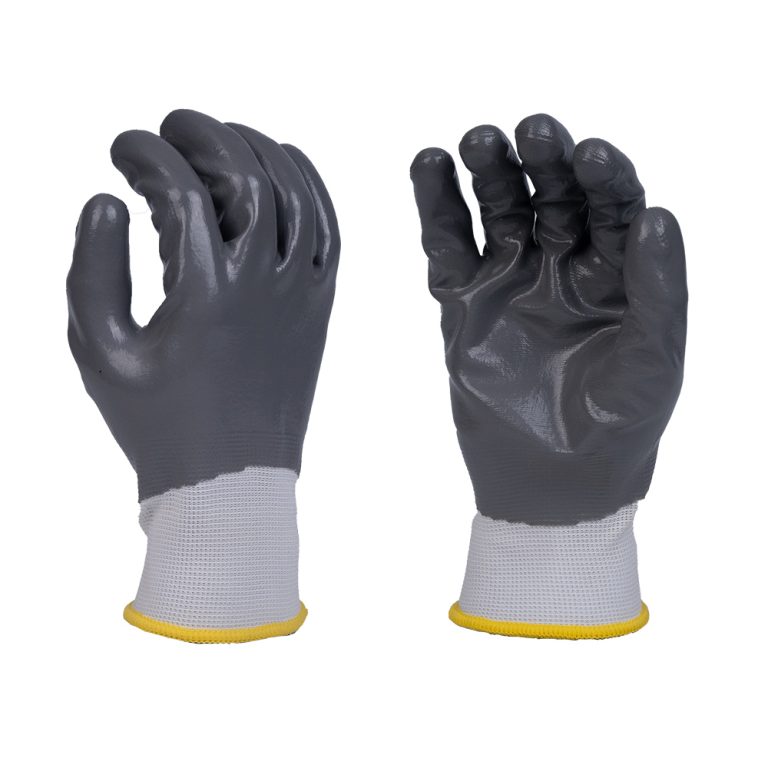
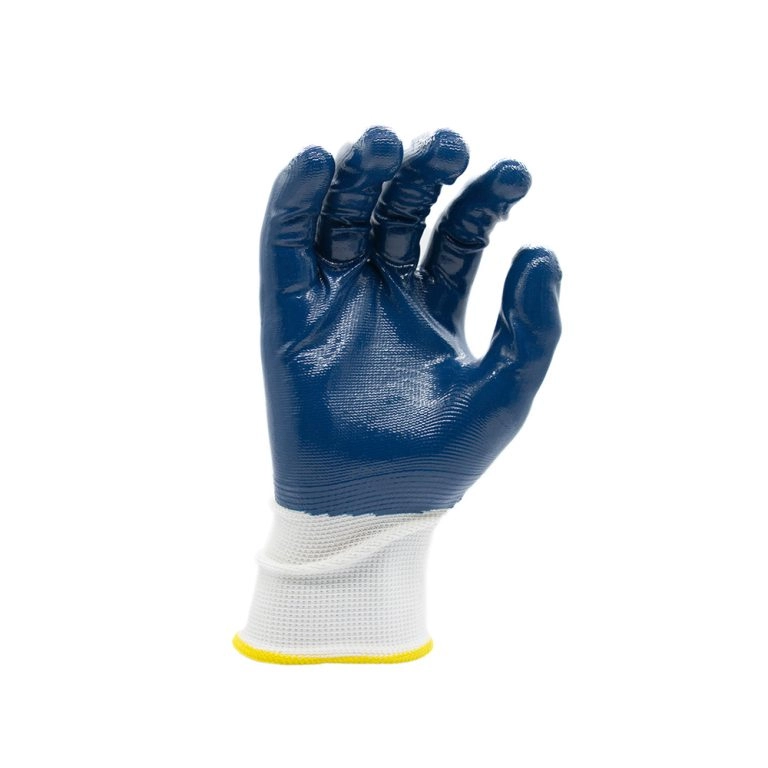
A fully coated glove can be appropriate when exposure extends beyond the palm. PONWELL’s fully coated nitrile waterproof gloves pair a 13-gauge knitted liner with a smooth full coating for wet and oily industrial environments. Chemical resistance must still be checked against the specific substance, concentration, temperature, contact time, and the supplier’s applicable test data; nitrile is not a universal chemical-protection claim.
Match the Liner to the Work
The liner determines much of the glove’s fit, flexibility, thermal feel, and mechanical protection.
- Polyester or nylon liners are common in lightweight general-handling gloves. They can support a close fit and dexterity, but the final performance depends on yarn, gauge, knitting, and coating.
- Cut-resistant liners use engineered fibers or fiber blends. Buyers should specify the required cut rating and request test documentation for the complete glove, not assume the nitrile layer itself provides the needed cut protection.
- Thermal liners add insulation for cold storage, outdoor work, or unheated facilities. They also add bulk, so grip, sizing, and tool control should be tested under working temperatures.
- Cotton or blended liners may improve comfort in some heavier constructions, although absorption, drying time, and laundering expectations should be considered.
Gauge is also important. A higher-gauge knit is generally finer and may support dexterity, while a lower-gauge or insulated construction can feel heavier. Compare complete samples rather than gauge alone.
Benefits That Matter in a Bulk Purchase
Grip and Dexterity
The appropriate finish can reduce the gripping force needed to hold parts, cartons, tools, or components. This may improve control during repetitive tasks. The benefit should be validated with representative objects and contaminants because laboratory descriptions and real workflows can differ.
Abrasion Life and Cost per Use
Nitrile coatings are often chosen for abrasion resistance, but procurement decisions should look beyond unit price. A more durable glove can lower replacement frequency, while an overbuilt glove may add unnecessary cost or reduce acceptance. Calculate cost per shift or task using a controlled wear trial, not a promotional durability claim.
Oil and Grease Handling
Nitrile is useful for many operations involving oily parts and lubricants. Finish and coverage determine whether the glove prioritizes traction, barrier coverage, or breathability. For chemical exposure, obtain substance-specific compatibility information.
Worker Acceptance
Fit, fingertip feel, cuff security, heat buildup, and ease of donning influence whether workers use gloves correctly. Include multiple hand sizes in trials and record both task performance and comfort over a realistic wear period.
A Bulk-Buying Specification Checklist
Before requesting prices, give each supplier the same application brief. Include:
- Task, industry, and objects handled.
- Dry, wet, oily, cold, or abrasive conditions.
- Required coating finish and palm, three-quarter, or full coverage.
- Liner material, gauge, insulation, and cut-protection requirement.
- Size range and expected quantity by size.
- Required test reports, labeling, and market documentation.
- Logo, color, packaging, carton, and barcode requirements.
- Trial quantity, routine order quantity, and estimated reorder pattern.
Use an approved sample as the reference for coating coverage, surface texture, dimensions, fit, color, marking, and packaging. For each production lot, agree on inspection points and acceptance criteria before issuing the purchase order. PONWELL’s complementary bulk work glove pricing and MOQ guide explains how quantity, customization, packaging, and specifications affect quotation comparisons.
Conclusion
Suitable nitrile coated gloves for a bulk program are built around the task. Smooth, foam, microfoam, and sandy finishes address different grip needs; palm and full coatings balance ventilation against coverage; and liner construction determines dexterity, insulation, and mechanical protection. Define these variables before comparing prices, then use application trials and documented acceptance criteria to control quality and total cost.
PONWELL offers nitrile-coated constructions for general handling, wet work, and cold-weather applications. For a project review, contact PONWELL with your RFQ and include the application, hazards, coating preference, liner, sizes, quantity, packaging, and required documentation.
FAQs
What is the difference between nitrile coated and disposable nitrile gloves?
Nitrile coated work gloves normally use a reusable knitted liner with nitrile applied to selected surfaces or the full glove. Disposable nitrile gloves are thin, unsupported gloves intended for different tasks and should not be treated as equivalent protection.
Are nitrile coated gloves waterproof?
Palm-coated gloves are generally not waterproof because the uncoated areas remain exposed. A fully coated construction may provide broader liquid resistance, but seams, cuff design, test results, and the manufacturer’s specification must be checked.
Which nitrile finish works for oily handling?
Textured, foam, microfoam, sandy, or frosted finishes may improve grip in oily conditions. Performance varies, so compare shortlisted samples using the actual oil, parts, tools, and movements involved in the job.
What should buyers approve before mass production?
Approve the complete specification and a representative sample, including liner, gauge, coating material, finish, coverage, size measurements, markings, packaging, documentation, and inspection criteria. Record the approved details for repeat orders.