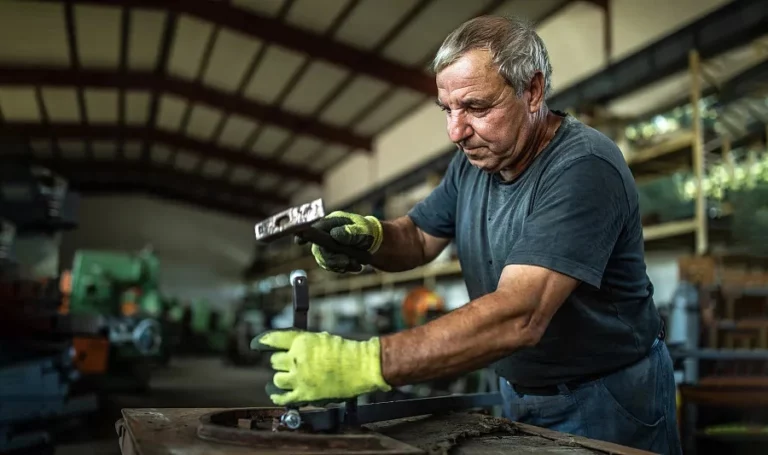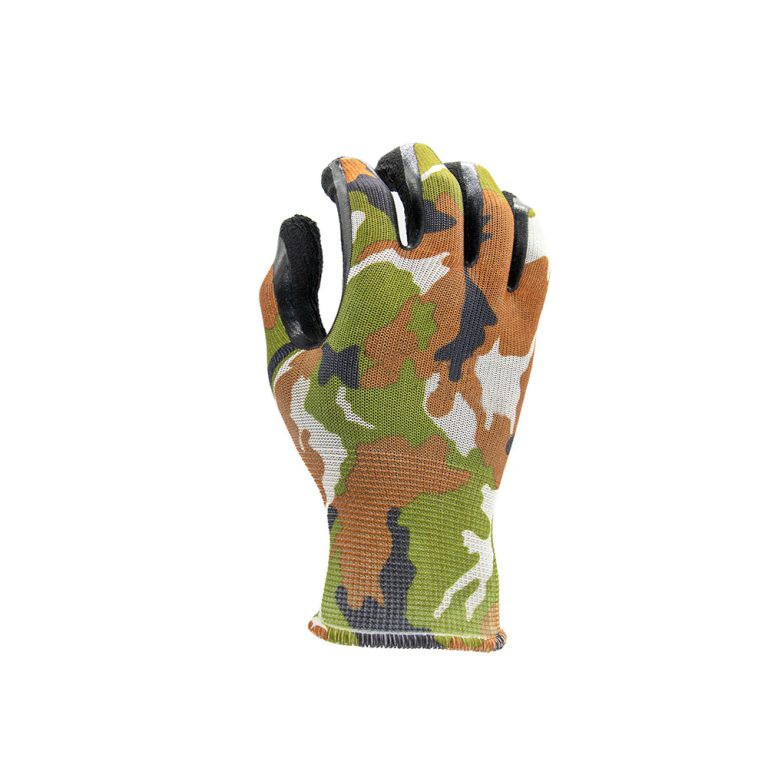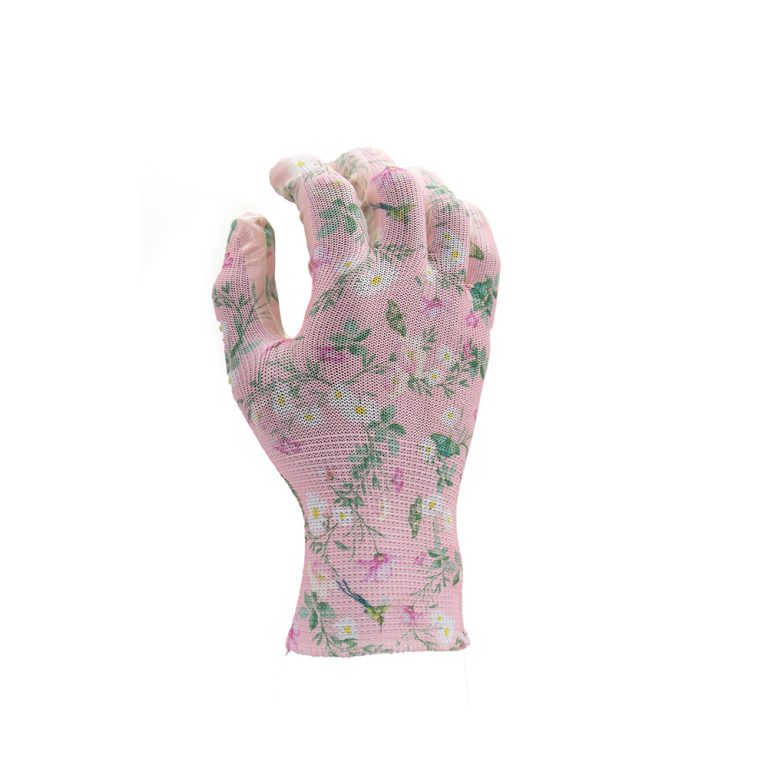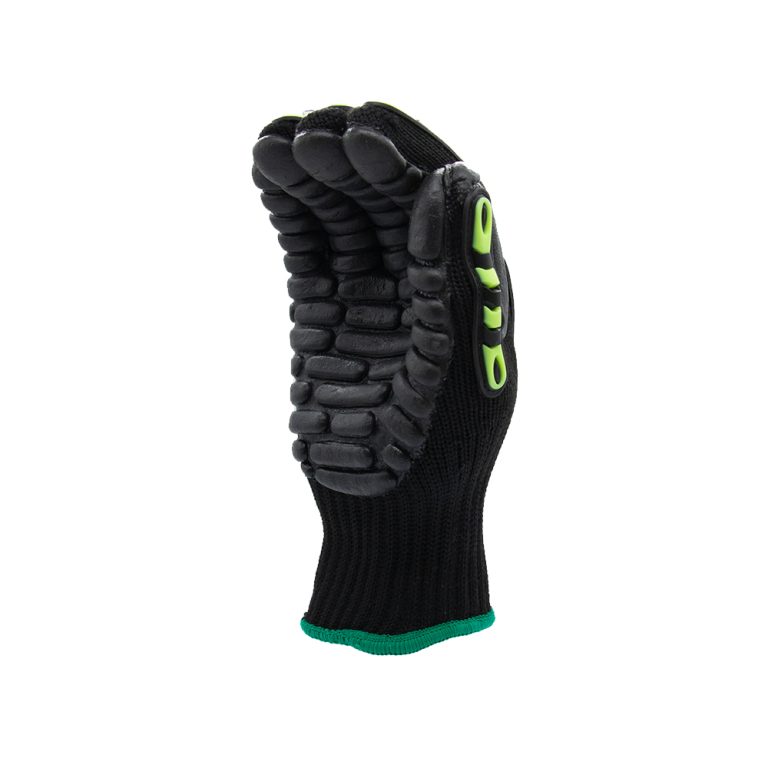

When a standard work glove does not match a task, customization should start with the hazard and the worker’s hand data, not with a logo. A specification connects cut, abrasion, impact, liquid, temperature, and dexterity demands to a liner, coating, pattern, cuff, and size range. For buyers, this makes an RFQ more precise. Working gloves customization can then deliver a repeatable product for a defined job.
Why Customize a Working Glove?
Customization is justified when a stock model creates a measurable gap, such as poor fit, lost grip in light oil, restricted finger movement, or insufficient coverage. Branding can support identification and worker acceptance, but appearance should follow the protection brief.
Start with the Job, Not the Product Name
Map hazards and work motions
Observe the task over a shift. Record contact with sharp edges, rough surfaces, oils, water, vibration, heat or cold, and the frequency of gripping, pinching, lifting, or tool operation. Note fingertip sensitivity, touchscreen use, wrist mobility, or a longer cuff. A job title such as “maintenance” is too broad; motion and exposure should control the specification.
Translate observations into requirements
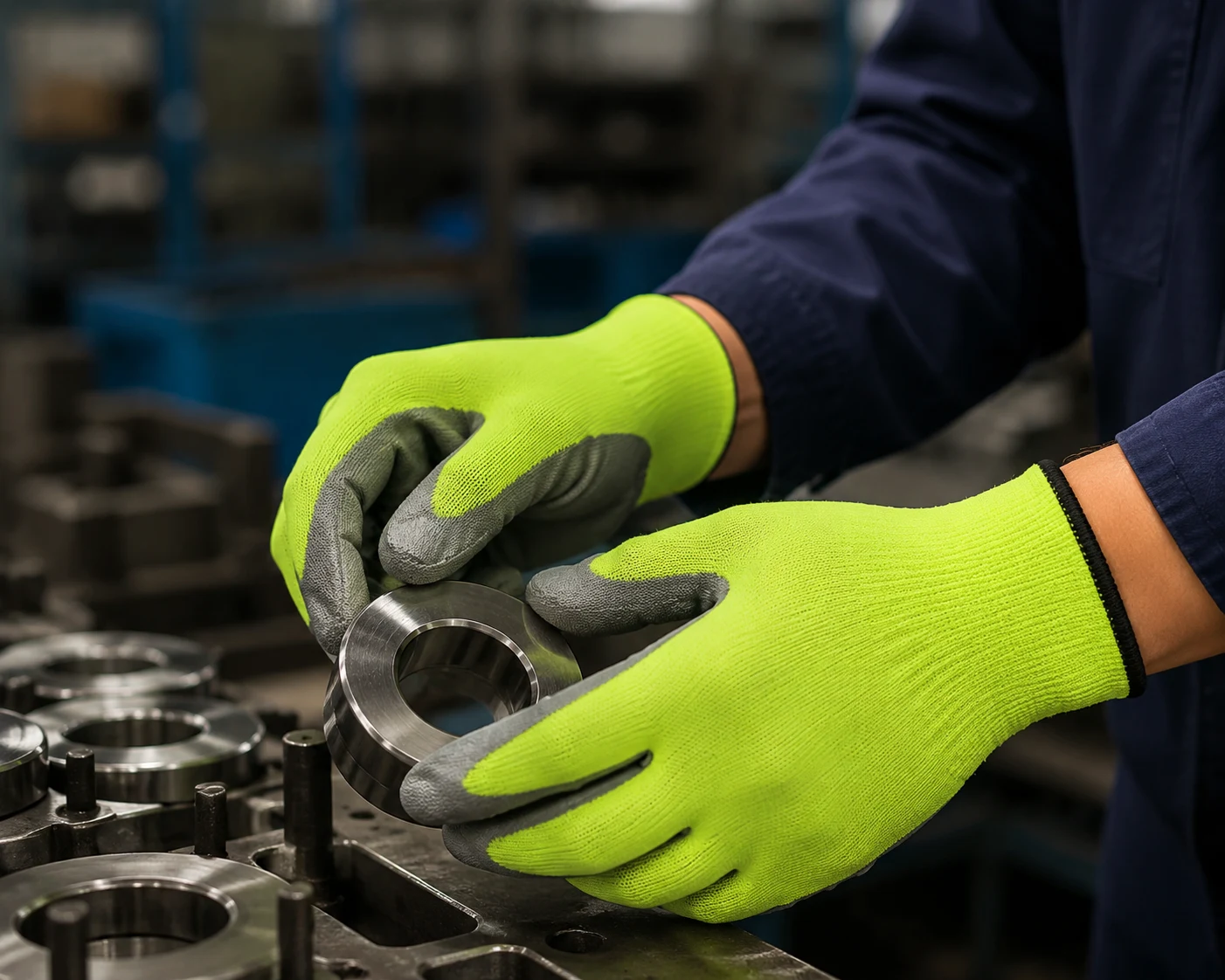
Turn observations into testable requirements and acceptance criteria. Cut-risk work may need a high-strength liner; precision assembly may need a fine-gauge seamless liner and thin coating. Wet handling may call for broader coverage, while anti-vibration padding can change dexterity and bulk. Ask the supplier to identify confirmed items, configuration-dependent items, and points requiring sample testing.
Select a Base Glove Before You Customize
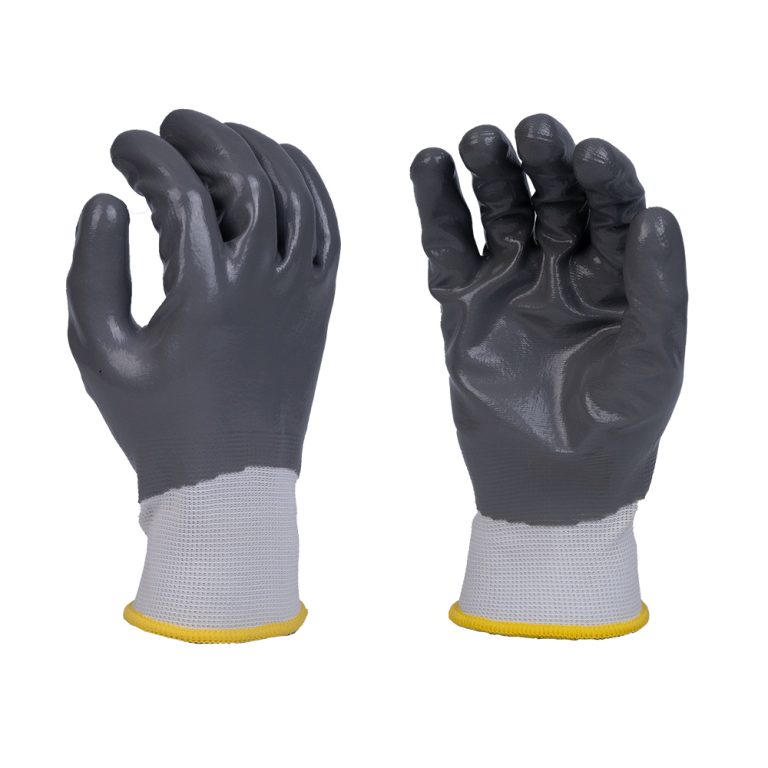
Starting from a proven construction controls development time and comparison. PONWELL’s industrial glove portfolio includes coated, cut-resistant, waterproof, shock-resistant, and cold-weather categories. Its 13-needle printed nitrile glove combines a seamless polyester or nylon liner with a smooth nitrile palm for dry and lightly oily handling. Its 21-needle HPPE cut-resistant PU glove uses a denser liner and PU coating for cut protection with fine handling. These are reference constructions; final suitability depends on the hazard assessment and specification review.
Choose the liner and gauge
Liner material and gauge influence fit, stretch, breathability, thermal feel, and finger control. Fine knitting can support dexterity, while heavier or insulated constructions may suit cold or rugged work. Confirm fiber composition, gauge, seam design, cuff length, and size grading in the technical file. For specialty fibers, require a material declaration and production-intent sample.
Choose the coating and coverage
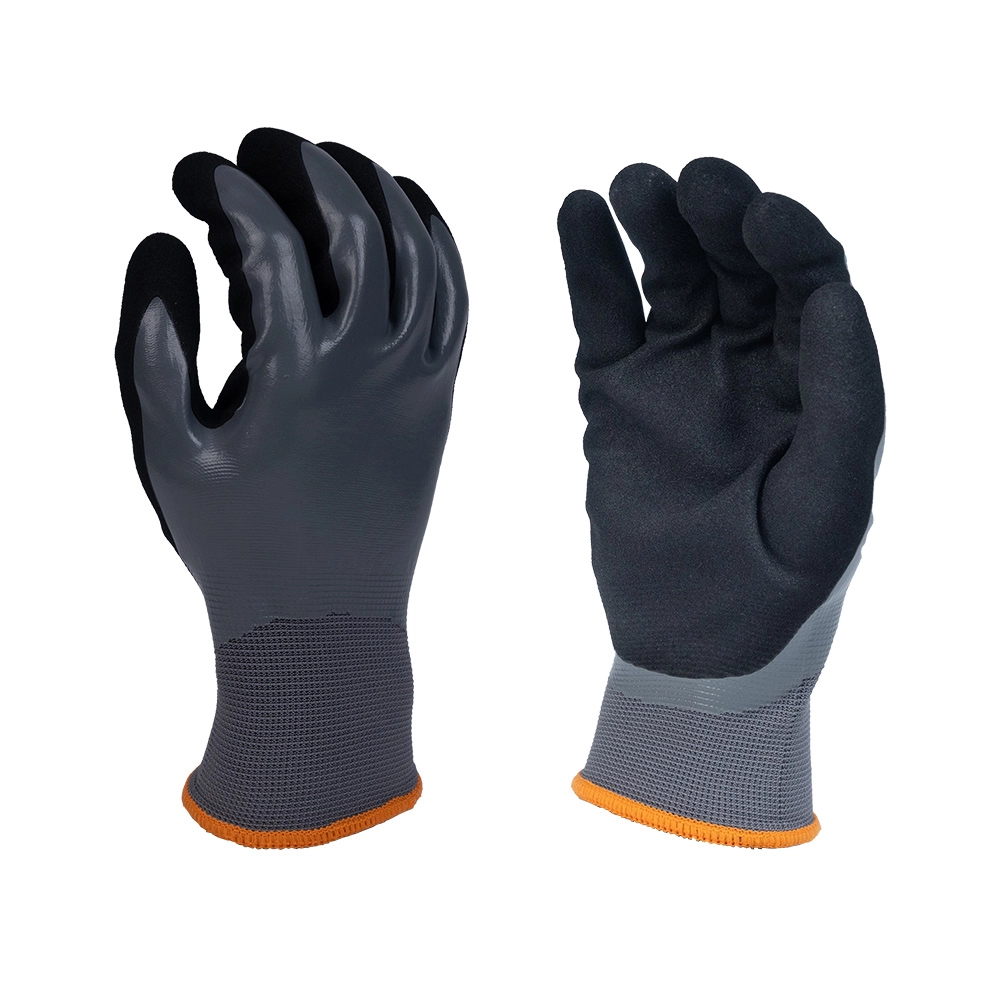
Nitrile, latex, PU, PVC, and other coatings behave differently under oil, water, abrasion, and temperature. Palm-only coverage preserves flexibility; full or extended coverage may provide a stronger moisture barrier. Match grip texture to the surface and holding force. Request coverage limits when they affect fit, and define visual or tactile defects that fail inspection.
Add job-specific features carefully
Common additions include reinforced fingertips, touchscreen compatibility, impact padding, thermal insulation, color coding, printed patterns, logos, and custom packaging. Each can influence cost, minimum order, weight, laundering, or lead time. PONWELL’s OEM/ODM customization program describes material selection, ergonomic patterns, grip features, cold-weather insulation, waterproof breathable membranes, and aesthetic branding. Treat these as options to confirm against the design brief, not blanket guarantees.
Build a Sizing System for the Workforce
Measure hands consistently
For a bulk program, measure the dominant hand across the knuckles without the thumb and record hand length from wrist crease to middle-finger tip. Use one method, instrument, and unit. Capture a representative sample across shifts, locations, and roles instead of relying on one “average” hand. Link measurements to an anonymous size code for the supplier’s grading proposal.
Validate fit in the real motion
Map measurements to the supplier’s chart, then test samples during grip, pinch, lift, and tool motions. Check fingertip clearance, palm tension, cuff security, seam pressure, and twisting when the wrist bends. A standing fit may fail overhead or on small parts. Agree on tolerances for length, width, coating alignment, and pair matching before approval.
Decide how many sizes to stock
More sizes can improve fit but increase inventory lines, packaging and replenishment risk. Use measurement distribution and task criticality to set a practical range. Consider separate regional curves only when data shows a difference. Document size labels, measurements, and packaging marks so reorders do not silently change fit.
Run Customization as a Controlled OEM/ODM Project
An ODM project begins with a performance brief when the buyer needs design help. An OEM project starts with a drawing, bill of materials, or approved sample to reproduce. Freeze the revision after sample approval. The control file should include liner, coating, color, artwork, cuff, size grading, packaging, inspection method, and applicable standards or declarations.
Use staged reviews:
- Brief review: confirm hazards, motions, environment, users, sizes, quantity, and target market.
- Design review: document materials, pattern, coating, features, artwork, and tolerances.
- Sample review: test fit, grip, dexterity, and protection against the stated job conditions.
- Pilot approval: inspect production-intent samples and packaging before a larger run.
- Change control: require written approval for substitutions, process changes, or artwork updates.
Evaluate a Supplier Beyond the Sample
Supplier selection should cover documentation and execution, not only a prototype. Ask for a technical datasheet, material and size information, revision control, and inspection plan. Quality evidence should explain controls for incoming materials, knitting, coating, curing, trimming, pairing, and packaging, plus segregation of nonconforming pairs and corrective actions.
Review communication during development: Can the team explain tradeoffs in coverage, gauge, and sizing with measurable values? Confirm artwork approval, carton identification, shipping documents, and reordering of that revision. After-sales support should cover fit complaints, field samples, and root-cause review. PONWELL presents a workflow from material inspection through packaging and OEM/ODM support; verify controls and records for the proposed model.
Prepare an RFQ or Fit-Check Checklist
Include the following minimum inputs in the request:
- Job description, hazards, contact materials, temperature, moisture, oil, and duty cycle.
- Required protection tests or internal acceptance thresholds, with the market or standard edition identified.
- Liner fiber, gauge, coating chemistry, coverage, grip texture, cuff, reinforcements, and special features.
- Hand-measurement method, size distribution, tolerance, labels, and packaging by size.
- Drawing, artwork, reference sample, revision number, quantity, delivery location, and target schedule.
- Sampling plan, inspection points, documentation, substitution rules, warranty boundaries, and escalation contact.
This exposes missing information before pricing and gives procurement a comparable specification.
Control Cost, Quality, and Lifecycle Risk
Customization can raise tooling, sampling, artwork, packaging, and minimum-order costs. A cheaper unit price may be offset by excess sizes, short wear life, poor worker acceptance, or emergency replenishment. Compare total cost of ownership: replacement rate, laundering or disposal, training, stock-keeping units, inspection labor, and PPE integration.
Substitution is a hidden risk. A different liner fiber, coating formulation, or size grade can change protection and comfort even when the product name stays the same. Put approved materials and change-notification rules in the purchase specification. Delivery and warranty terms may vary by configuration, quantity, and destination, so obtain them in writing. Retain golden samples, signed artwork, inspection records, and traceable lot codes.
Conclusion
Effective working gloves customization connects job analysis to a controlled product and sizing system. Define hazards and motions, select a base construction, validate fit, and freeze the revision. Evaluate documentation, quality controls, communication, packaging, and support as carefully as the glove. PONWELL offers coated, cut-resistant, waterproof, shock-resistant, and cold-weather gloves, plus OEM/ODM options to assess against a brief. To start a fit review, contact the technical team with the model or sample, job conditions, hand measurements, quantity, and market.
FAQs
Can a custom glove use several sizes in one order?
Yes. Confirm the size curve, packaging marks, carton quantities, and minimum quantity per size before approval.
Should every job have a unique glove?
Not necessarily. Group tasks with the same hazards and motions, then customize only where a standard or shared base glove cannot meet the documented requirements.
How do buyers verify a customized glove?
Approve a production-intent sample, run it through representative motions and exposures, and compare incoming lots with the signed specification, measurements, and inspection criteria.
Does a logo make a glove OEM?
No. Logo printing is a branding change. OEM means producing to a defined specification, while ODM includes collaborative design or development; the exact scope should be written into the project file.